
Moving to a new city can open doors for a family, but it also changes the familiar details that help children feel secure. A different route to school, an unfamiliar bedroom, and the prospect of making new friends may feel more important to a child than the opportunities that motivated the move. Parents often have to manage those emotions while coordinating housing, transportation, enrollment, and everyday responsibilities. It helps to decide early which routines must stay consistent and which parts of the transition can remain temporarily flexible.
A smoother transition starts with treating the move as both a practical project and a family experience. Researching neighborhoods and schools early can reduce last-minute decisions, while involving children in age-appropriate ways gives them a clearer sense of what is happening. Parents can also decide which tasks to handle themselves and where professional help would protect time for their children. The following steps cover decisions to make before departure, priorities for moving week, and ways to build a workable routine after arrival.
Research Neighborhoods Around Your Family’s Daily Needs
A new address affects much more than the distance between home and work. Before committing to a neighborhood, consider how the family will travel to school, after-school activities, medical appointments, and essential stores. A house that looks ideal during a weekend visit may feel less convenient when everyone needs to leave at the same time on a weekday morning. Map out a realistic school-day schedule, including pickup arrangements and the time needed for unexpected delays.
Look at several neighborhoods rather than relying on one appealing listing. Compare housing requirements, walkability, access to parks, public transportation where available, and nearby programs your children might enjoy. If possible, visit at different times of day to understand traffic, street activity, and the general pace of the area. Parents who cannot visit in person can use virtual tours and conversations with local residents to develop questions for further research, while recognizing that online impressions have limits.
Ask children which parts of their current neighborhood matter to them. One child might value a basketball court, while another wants a library within easy reach. Their answers can help distinguish genuine family priorities from features that simply look attractive in a property description. Keep a short list of nonnegotiable needs and a separate list of preferences so one appealing amenity does not distract from school access or an achievable daily routine.
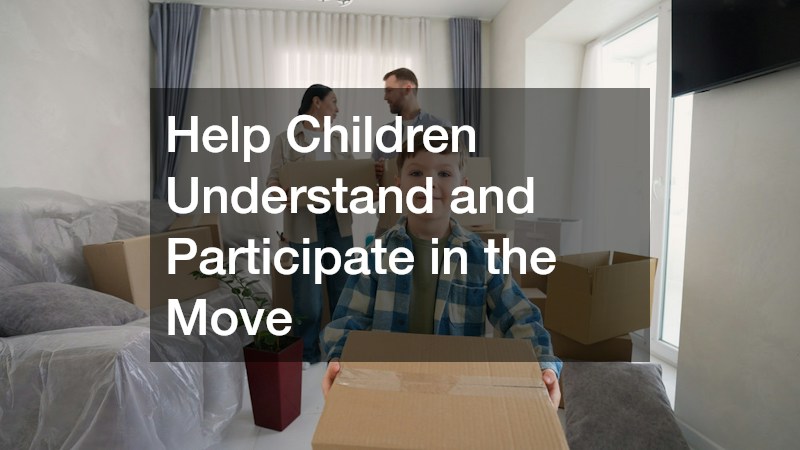
Help Children Understand and Participate in the Move
Children may respond differently to the same announcement. Some are excited about a new home, while others worry about leaving friends, familiar teachers, or activities they have worked hard to join. Make room for both reactions without insisting that everyone feel positive immediately. Explain what is known, acknowledge what remains undecided, and invite questions more than once; concerns often surface after children have had time to think.
Give each child meaningful choices suited to their age. Younger children can select a few belongings for an overnight bag or choose where favorite books will go in their new room. Older children might research nearby clubs, compare routes to school, or help plan a farewell gathering. These decisions will not remove every worry, but they create a role for children in a process largely directed by adults.
Preserve connections to the place you are leaving. Arrange contact information for friends, discuss realistic plans for calls or visits, and leave time for goodbyes when possible. Avoid promising that friendships will remain exactly the same or that the new city will be better in every way. Instead, explain how the family will support both old relationships and opportunities to meet new people. A visible calendar showing packing days, the trip, and the first school day can also make an abstract change easier to understand.
Compare Schools Beyond Their Names and Rankings
School research deserves its own timeline because enrollment requirements, available places, and application dates can vary. Begin with the school district or individual school’s official information, then contact admissions or registration staff about documentation, grade placement, transportation, and important deadlines. Ask how the school supports students who enroll during the academic year, especially if your move cannot align with a scheduled break.
Families considering private education should examine the actual experience on offer rather than treating a search for the best private schools as a final answer. Review teaching approaches, tuition and additional fees, financial assistance, class schedules, student support, and extracurricular opportunities. Parents comparing private high schools may also want to ask about graduation requirements, course availability, college or career counseling, and how transfer credits are evaluated. A younger sibling might need a private preschool with hours that work alongside the older child’s school day.
When possible, tour campuses and ask questions specific to your child. How does the school welcome newcomers? Who helps a student who is struggling socially or academically? What happens if a child needs additional learning support? Talk with your child about what they notice, but keep responsibility for the final choice with the adults. Record answers in a simple comparison sheet, and verify policies directly with each school before making enrollment or housing commitments.

Choose Moving Help That Matches the Distance and Schedule
The right approach to transportation depends on how far you are going, how much you own, and how much flexibility your family has. Long distance movers may offer services suited to travel between cities or across state lines, while statewide movers may be an option for relocations within one state. Local moving companies can be worth contacting for a shorter move or for help loading and unloading at either end. Service areas and definitions vary, so confirm that each provider actually handles your route.
Request written estimates from more than one moving business. Describe the volume of belongings, stairs, parking restrictions, access to both properties, and any items needing special handling. Ask what the quoted moving service includes, which tasks cost extra, how delivery windows are determined, and what happens if plans change. Check the company’s applicable licensing and insurance information, understand the available coverage for belongings, and review the agreement before paying or signing.
If you need help boxing up a household, ask whether professional packers are available and which supplies they provide. Clarify who will pack fragile or valuable items and how boxes should be labeled. Schedule key dates around lease or closing arrangements and school obligations, but leave some flexibility for delays. The goal is not to hire every available service; it is to choose support that makes the move manageable without losing sight of the children’s needs.
Pack Strategically and Plan for Temporary Storage
Packing is easier when parents separate what the family needs immediately from what can stay sealed for several weeks. Start with seasonal decorations, rarely used equipment, and other nonessential possessions. Sort items into categories for keeping, donating, recycling, or disposing of, following local rules where appropriate. Invite children to help decide which toys and books still matter to them, without making them responsible for major household decisions.
Create an essentials bag or clearly marked box for each family member. Include clothing, toiletries, medications, chargers, school materials, a comfort item, and anything needed for the first night. Keep important documents and irreplaceable valuables with you rather than placing them in a shipment. Photograph complicated electronics before disconnecting them and label boxes by room and general contents, not only by a number that requires a separate list to interpret.
If the new home will not be ready when the old one must be vacated, self storage may provide a temporary place for items that are not immediately needed. Compare access hours, unit conditions, security features, rental terms, and how the stored belongings will eventually reach the new address. Avoid packing items you will need for school registration or daily routines into a hard-to-reach unit. A simple inventory and an agreed plan for retrieving essentials can prevent storage from creating another layer of confusion.

Organize School Records and Other Essential Paperwork
Administrative tasks can be easy to overlook while rooms are filling with boxes. Before leaving, ask the current school which records will transfer directly and which forms parents must request or submit themselves. The receiving school can explain its requirements for proof of residence, identification, immunization records, and any other applicable documentation. Because rules differ by school and location, use the receiving institution’s current instructions rather than assuming that paperwork accepted previously will be sufficient.
Keep copies of report cards, course descriptions when relevant, individualized learning plans or accommodation documents if applicable, and contact details for teachers or counselors. Families moving during the school year should ask how assignments, attendance, course placement, and extracurricular eligibility will be handled. If a child is receiving specialized services, arrange an early conversation with the new school’s appropriate staff about continuity and next steps.
Make a separate checklist for medical, dental, and other family records, along with address changes, insurance questions, and any activity registrations. Store sensitive documents securely and share them only through channels approved by the recipient. Choose one place, digital or physical, to track what has been requested, received, and submitted. This organization cannot eliminate every enrollment surprise, but it makes it easier to identify missing information before the first day of class.
Protect Routines and Comfort During Moving Week
Moving week often involves unpredictable schedules, unfamiliar surroundings, and adults who are focused on logistics. Build the plan around a few dependable anchors: regular meals, opportunities to rest, and a familiar bedtime routine when circumstances allow. Explain the next day’s schedule in plain language, including who will supervise the children while belongings are loaded, transported, or unloaded. If caregivers or relatives can help, confirm arrangements ahead of time rather than improvising around a busy driveway.
For travel, pack snacks, water, weather-appropriate clothing, entertainment, and any items children use to settle themselves. Keep medicines and essential supplies accessible. Give older children a manageable role, such as checking that their personal bag is ready, without assigning them responsibility for supervising younger siblings or directing the move. If a child becomes overwhelmed, provide a quiet break and acknowledge the feeling instead of treating it as an obstacle to the schedule.
Once you arrive, prioritize safe sleeping spaces and access to the bathroom and kitchen before unpacking decorative items. Set up a few familiar objects in each child’s room so the space feels recognizable. Review basic safety features of the new home and agree on what children should do if they cannot find a parent during unpacking. A predictable first evening matters more than getting every box emptied immediately.

Build Connections and Adjust After Arrival
The transition does not end when the furniture is in place. Children may initially enjoy exploring, then miss their old routines once classes begin or the excitement fades. Check in regularly with open questions about school, friendships, and the new neighborhood. Listen for specific challenges rather than interpreting every difficult day as evidence that the move was a mistake. If concerns persist or interfere with daily life, consider speaking with school staff or an appropriate professional for additional support.
Introduce the family to the area gradually. Visit a nearby park, find the library, establish a convenient grocery route, and explore activities that match each child’s interests. Encourage social opportunities without requiring immediate friendships. A school club, community class, or familiar hobby can create repeated chances to meet people, while scheduled contact with old friends helps children maintain a sense of continuity.
Review the family’s original plan after a few weeks. A commute may take longer than expected, an activity may not suit its new schedule, or a child may need more time before joining a group. Adjust what you can and celebrate concrete progress, such as learning a bus route or feeling comfortable asking a teacher for help. A successful family move is not defined by a flawless first month. It develops as parents respond to practical problems, make space for children’s feelings, and help the new city become a place where everyday life feels familiar again.